
Start here
The quick answer
Work top-to-bottom, back-to-front: dust and walls first, floors last. The rooms that decide inspections are the kitchen (inside the oven, fridge, and every cabinet) and bathrooms (descaled, disinfected, mirror-streak-free). Budget 4–8 hours for a typical apartment if you do it yourself, or $250–$450 to have it done professionally — see our Toronto cleaning price guide for what that buys.
Before you start
Supplies that make this dramatically easier
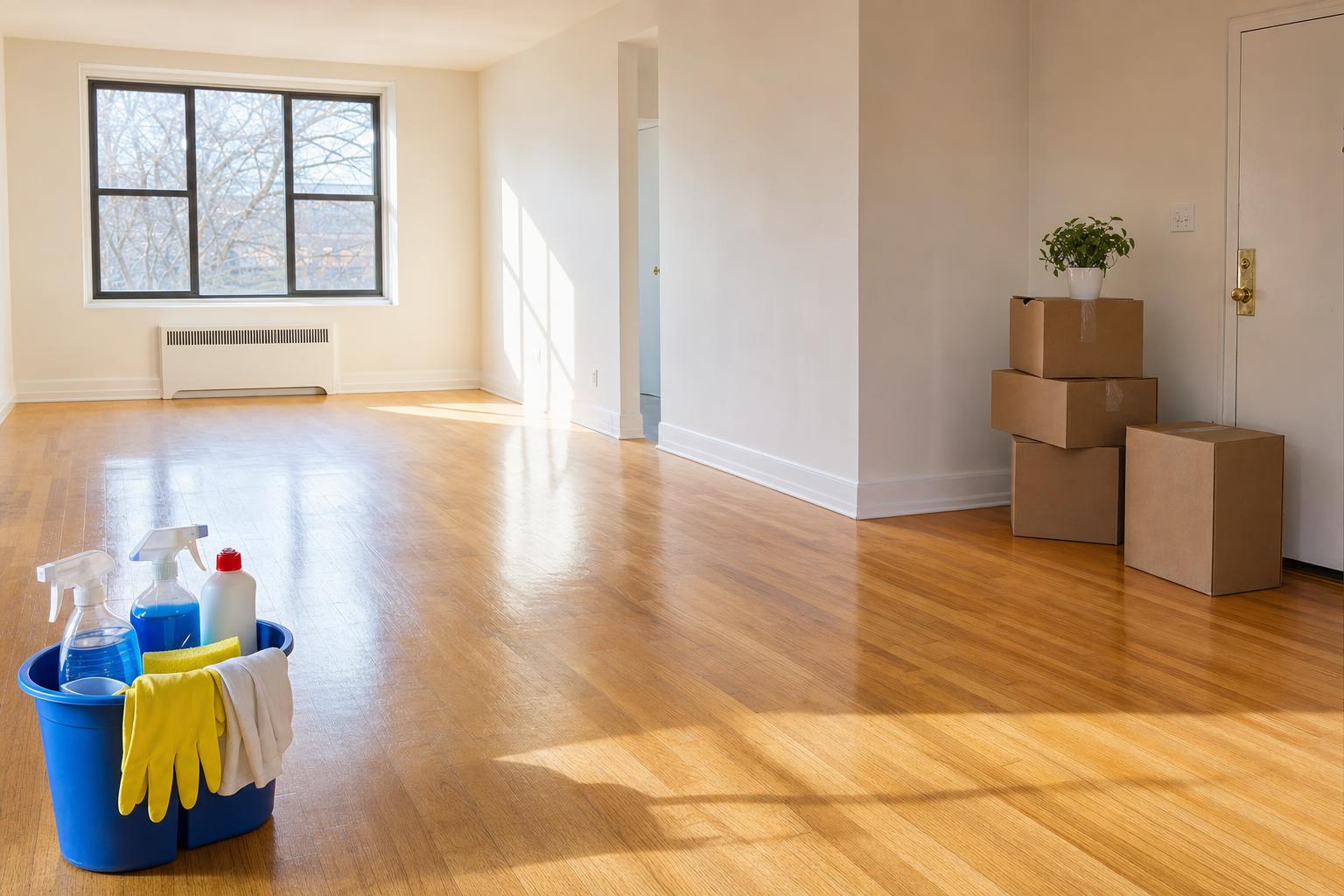
A move-out clean is mostly patience, but the right supplies cut hours off it. Gather these before you start:
- All-purpose cleaner and a degreaser for the kitchen
- Descaler or vinegar solution for taps, shower glass, and kettles of Toronto's hard water
- Oven cleaner (the overnight kind, applied the evening before)
- Magic erasers for wall scuffs and light-switch grime
- Microfibre cloths — at least a dozen — and a streak-free glass cleaner
- Vacuum with crevice tool, mop, and bucket
- Garbage bags, rubber gloves, and a step stool for high shelves and fixtures
Strategy
Three rules that save you from cleaning twice
Empty first, clean second
Cleaning around boxes guarantees re-cleaning. Do the clean after the movers, on an empty unit — it is faster, and it is the state the inspection will see.
Top to bottom, back to front
Dust falls. Start with fixtures, fans, and shelves, end with floors, and work toward the front door so you never walk across a finished room.
Photograph everything when done
For tenants: timestamped photos of the cleaned unit are your evidence if a deposit dispute appears. For landlords: the same photos set the baseline for the next tenancy.
Room by room
The move-out cleaning checklist
1. Kitchen — the room inspections fail on
Inside the oven (racks out, door glass included), inside and behind the fridge, inside the dishwasher including the filter, and the microwave inside and out. Every cabinet and drawer emptied and wiped — crumbs in a drawer read as "not cleaned" no matter how good the floors look.
Degrease the range hood and backsplash, descale the faucet, polish the sink, and finish with counters and the floor. Pull the fridge and stove out if they move — the strip of floor under them is a classic inspection check.
2. Bathrooms — where scale gives you away
Descale the showerhead, taps, and glass; scrub grout; disinfect the toilet including the base and behind it. Empty and wipe the vanity inside and out, clean the mirror streak-free, and clear the drain of hair.
Toronto's hard water leaves mineral rings that ordinary spray does not touch — this is where the vinegar solution or descaler earns its place. Finish with the exhaust fan cover: rinse the dust off, it takes two minutes and inspectors notice it.
3. Bedrooms and living areas
Wipe inside every closet and shelf, dust window sills and tracks, clean interior windows, and erase wall scuffs with a magic eraser — filling nail holes is usually the tenant's job in Ontario if they hung things, so patch and touch up where required by your lease.
Wipe baseboards, door frames, door handles, and light switches. Dust ceiling fixtures and fans. These "edges" of a room are what make an empty space read as genuinely clean.
4. Floors — last, always
Vacuum every room including closets and under radiators, using the crevice tool along baseboards. Then mop hard floors, working toward the exit. If carpets have stains or the lease requires it, book a steam clean — it is often listed explicitly in Ontario leases.
5. The final pass
Entry door inside and out, mailbox area, balcony swept, light bulbs working, all garbage out, and a last walk-through with fresh eyes — or a friend's. Then take your timestamped photos of every room, open closets and appliances included.
Tenant & landlord notes
The spots that cause handover disputes
Oven and fridge interiors
The single most cited "professional cleaning required" trigger. If they are not spotless, a landlord can reasonably bill for cleaning — doing them properly is an hour that protects hundreds of dollars.
Wall scuffs vs. wear and tear
In Ontario, normal wear and tear is the landlord's cost, but marks beyond that — scuffs, crayon, nail holes from heavy mounting — are typically the tenant's. A magic eraser and a small patch kit resolve most of it cheaply.
Lingering smells
Cooking and pet smells survive surface cleaning. Wash what caused them (range hood filter, garbage area), air the unit out for a day, and avoid masking sprays — inspectors read heavy air freshener as a cover-up.
"Professionally cleaned" lease clauses
Some leases require professional cleaning or carpet steaming at move-out. If yours does, keep the receipt — it is your proof, and it usually costs less than the deduction it prevents.
DIY or book it
When hiring a move-out clean makes more sense
A DIY move-out clean of an apartment takes 4–8 focused hours. Booking it out makes sense when:
- You are moving the same weekend — cleaning an old unit while unpacking a new one is how corners get cut.
- The lease requires professional cleaning or carpet steaming with receipts.
- The unit has years of build-up — a pro team with equipment finishes in hours what takes a resident a full weekend.
- You are a landlord on a tight turnover — a booked clean between tenants protects the next lease start date.
- The deposit at stake is larger than the $250–$450 a professional move-out clean costs.
FixitTask
Book a move-out clean in Toronto
Compare local cleaners who do move-out and move-in cleans, check their reviews, and book with no agency in the middle — or send photos and get matched with the right pro.
FAQ
Questions people usually ask
How long does a move-out clean take?
DIY: 4–8 focused hours for a typical apartment, more for a house or a unit with heavy build-up. A professional team typically finishes the same unit in 2–4 hours because of equipment and division of labour.
How much does professional move-out cleaning cost?
In Toronto, typically $250–$450 depending on size and condition — a one-bedroom condo at the lower end, a family home at the upper. Inside-oven and inside-fridge cleaning should be included in a move-out package; confirm when booking.
Is the tenant or landlord responsible for cleaning in Ontario?
Tenants are expected to return the unit in a state of ordinary cleanliness; normal wear and tear is the landlord's responsibility. Specific obligations like carpet steaming appear in some leases — check yours, and keep receipts for anything it requires.
What do landlords check most at move-out inspections?
Kitchen appliance interiors (oven and fridge above all), bathroom scale and grout, inside cabinets and closets, floors under and behind appliances, and wall condition. An empty unit hides nothing, which is why those five areas decide most inspections.
Should I clean before or after the movers?
After. An empty unit cleans faster and matches what the inspection will see. If your schedule forces same-day handover, book a professional clean for the hours right after the truck leaves.