
Start here
The quick answer
Aim to finish outdoor work by late October — before the first hard freeze, which typically hits Toronto between late October and mid-November. The big five: clear the eavestroughs after leaf drop, shut off and drain outdoor taps, re-caulk and weatherstrip before temperatures fall (caulking needs mild weather to cure), service the furnace and swap its filter, and test smoke and CO alarms. Everything else on this list is refinement. Short on time? Get a quote — one half-day handyman visit covers most of it.
Before you start
Supplies for a weekend of fall prep
Most of this list needs nothing exotic — gather it once and the weekend goes smoothly:
- Sturdy ladder and work gloves (plus a scoop or trowel for eavestroughs)
- Exterior-grade caulking and a caulking gun — plus a mild-weather day to apply it
- Weatherstripping and a door sweep for drafty entries
- A fresh furnace filter (check the size printed on the old one)
- Fresh batteries for smoke and CO alarms
- Hose bib covers and a bucket for draining outdoor lines
- Garbage bags for leaves, plus a tarp to speed up gutter cleanup
Strategy
Three rules of Toronto fall prep
Watch the frost date, not the calendar
Toronto's first hard freeze usually lands between late October and mid-November. Outdoor water shut-offs and caulking need to happen before it — caulking in particular cures poorly once daytime temperatures sit near freezing.
Eavestroughs after leaf drop, not before
Clean gutters in early October and the maples will refill them by November. In leafy neighbourhoods — the Beaches, Leaside, High Park — plan the real clean for after most leaves are down, even if that means early November.
Book pros early
Furnace techs, gutter cleaners, and handymen hit peak season in October and November. Booking in September or early October gets you better slots and often better prices than the pre-freeze rush.
Room by room — outside in
The Toronto fall maintenance checklist
1. Eavestroughs and downspouts — the ice-dam insurance
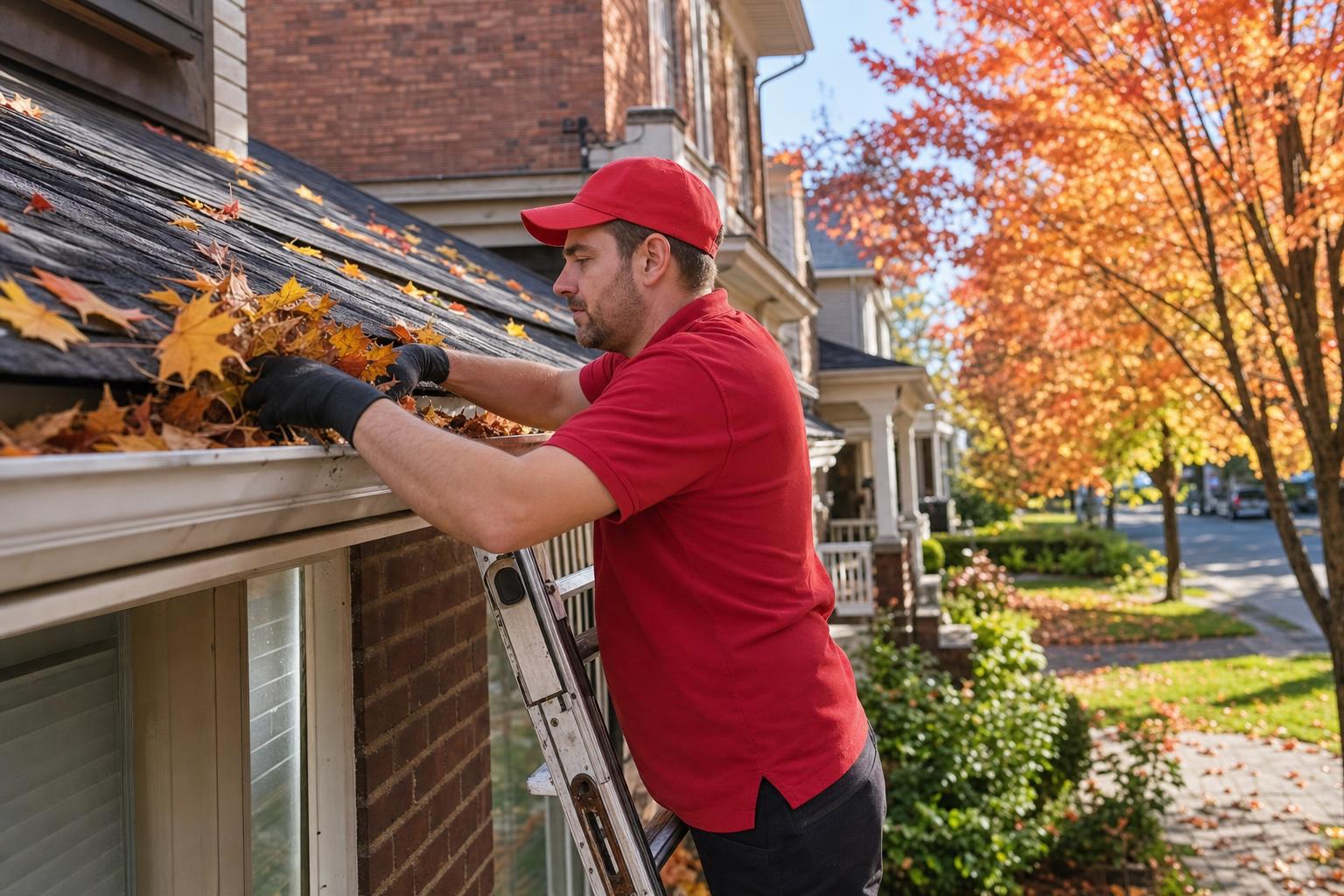
Clogged eavestroughs are the root of most Toronto winter roof problems: water pools, freezes, and works under the shingles as ice dams. Scoop them clear, flush with a hose, and confirm downspouts actually discharge 1–2 metres away from the foundation — not into a flowerbed against the wall.
While you are up there, look at the roof edge: lifted shingles, cracked plumbing-stack boots, and gaps at the flashing are ten-minute fall fixes that become emergency calls in February.
2. Outdoor water — shut off, drain, disconnect
Disconnect and drain garden hoses, shut the interior valve feeding outdoor taps, then open the outdoor tap to drain the line. A burst hose bib is one of the most common — and most preventable — winter plumbing calls in the GTA.
Drain or blow out irrigation lines if you have them, empty rain barrels, and store planters that hold water — freeze-thaw cracks ceramic and concrete alike.
3. Windows and doors — caulking and weatherstripping
Walk the exterior and re-caulk gaps around window frames, door frames, and anywhere pipes or cables enter the house. Do it on a mild day — exterior caulking wants temperatures comfortably above freezing to cure properly, which is exactly why this cannot wait until December.
Inside, replace flattened weatherstripping and add a door sweep to drafty entries. Old Toronto houses — Riverdale semis, High Park Victorians — lose a startling share of heat through entry gaps that cost $30 in materials to close.
4. Furnace and heating — service before the first cold night
Swap the furnace filter (then every 2–3 months through winter), clear storage away from the furnace, and run the heat once on a mild day so the first real cold night is not the system's first test. If the furnace is due for its annual service, book it now — HVAC calendars in November are brutal.
Bleed radiators in older homes, vacuum baseboard heaters, and if you have a humidifier on the furnace, replace its pad and set it for winter.
5. Safety checks — ten minutes, non-negotiable
Test every smoke and CO alarm and replace batteries. Ontario requires working smoke alarms on every storey and outside sleeping areas, and CO alarms near bedrooms in homes with fuel-burning appliances or an attached garage — and winter, with sealed windows and running furnaces, is exactly when CO risk peaks.
Clean the dryer vent line and exterior flap — lint plus long winter drying cycles is a genuine fire hazard, and a clogged vent also doubles drying times.
6. The outdoor wrap-up
Store or cover patio furniture and the BBQ, stack anything wind can throw, and cut back plants away from the siding. Check deck boards and railings while it is still comfortable to fix them — a loose railing under snow is an accident waiting for January.
Finally, put winter supplies where you can reach them: shovels by the door, ice melt in the garage, snow brush in the car. Future-you, in the first surprise storm, says thanks.
Catch it now
Fall warning signs that deserve attention before winter
Water stains high on walls or ceilings
Often last winter's ice dam telling on itself. Fix the gutter and attic-insulation causes now — the stain repainted in October beats the drywall repair in March.
Condensation between window panes
A failed seal. The window still works but insulates worse every year. Get quotes in fall — window companies discount shoulder-season installs.
Furnace short-cycling or a dusty burning smell
A first-heat burning smell for an hour is normal dust. Short-cycling, persistent smells, or weak airflow are not — book service before the November rush.
Doors that suddenly stick in fall
Humidity swelling, settling, or hinge wear. A plane-and-adjust is a quick handyman fix now; a door that will not latch in a January wind is a colder problem.
DIY or book it
What to hand to a pro this fall
Most of this list is honest DIY. These jobs are usually worth booking out:
- Anything on a ladder above one storey — gutters, upper-window caulking, roof-edge checks.
- Furnace and HVAC service — annual maintenance keeps warranties valid and catches CO risks.
- Roof repairs of any kind — fall is the last comfortable window before spring.
- A grouped "fall list" visit — one handyman half-day ($200–$350) can clear caulking, weatherstripping, dryer vent, and a dozen small fixes at once.
FixitTask
Knock out the whole fall list in one visit
Tell us what your home needs — or send photos of the trouble spots — and get matched with a Toronto pro who can clear the list before the first freeze.
FAQ
Questions people usually ask
When should I winterize my home in Toronto?
Finish outdoor tasks by late October. Toronto's first hard freeze typically arrives between late October and mid-November, and jobs like exterior caulking and outdoor water shut-offs need to happen before it.
How much does fall maintenance cost if I hire it out?
Typical Toronto prices: gutter cleaning $150–$300, furnace service $120–$250, and a general handyman half-day for caulking, weatherstripping, and small fixes around $200–$350. Bundling small jobs into one visit is the best value.
Do I really need to clean eavestroughs every year?
In most Toronto neighbourhoods, yes — and in heavily treed areas, sometimes twice (early summer and after leaf drop). Clogged gutters are the leading cause of ice dams and the foundation-side water problems that follow.
What temperature is too cold for caulking?
Most exterior caulks want application temperatures comfortably above freezing — many specify 5°C or warmer — and cure poorly below that. In Toronto that makes October the practical deadline.